

The majlis is the most culturally significant room in an Emirati or Gulf Arab home: a dedicated reception space for guests, a room that communicates the family’s hospitality, their taste and their social standing through every design decision from the proportions of the room to the quality of the diwan to the scent of the bakhoor that greets arrivals. Getting the majlis right is not merely an aesthetic exercise. It is an expression of cultural identity, and the design decisions that produce a majlis that feels genuinely right to UAE national and GCC clients are different from the decisions that produce a merely beautiful room. This guide covers traditional, contemporary and blended majlis design approaches with specific furniture recommendations, colour palette guidance and cost estimates, drawing on Kat Black Design Studio’s completed majlis portfolio across UAE national households in Dubai, Abu Dhabi and the northern emirates.
What Makes a Great Majlis?
A great majlis succeeds on four levels simultaneously. Spatially, it is proportioned correctly for its function: wide enough for a continuous perimeter of diwan seating with a clear central floor area that does not feel crowded when 15 to 20 guests are present, and with a ceiling height that communicates the importance of the room relative to the rest of the villa. Materially, it uses the finest materials the household can appropriately afford: the quality of the stone, the weight and lustre of the textile, the precision of the plasterwork and the richness of the timber are all read and assessed by every guest who enters. Functionally, it is equipped for the rituals of Arabic hospitality: a dedicated bakhoor burning station or built-in incense burner in the most senior position, a side table or alcove for the dallah and finjan coffee service, and a serving route from the kitchen to the majlis that does not require staff to cross through the family living areas. And atmospherically, it has the quality of a room that invites conversation, reflection and ease: not a formal showroom to be admired but a living room to be inhabited by guests in a spirit of genuine hospitality.
Traditional Arabic Majlis Ideas
The traditional Arabic majlis design draws from the spatial conventions and material culture of the Gulf Arab reception room as it developed across the 19th and early 20th centuries, before the arrival of the imported luxury goods of the post-oil period. The traditional references are austere and elegant rather than opulent: low seating, generous floor area, a dominant ceiling treatment that organises the room from above, and a material palette that is warm, rich and crafted rather than flashy.
Traditional Diwan Configuration
The diwan, the continuous banquette seating that lines the perimeter of the traditional majlis, is the room’s defining furniture element. In its most traditional form, the diwan sits directly on the floor or on a low platform of 100 to 150 millimetres, without legs, with a back cushion against the wall and seat cushions on the platform. The fabric is typically a heavy silk brocade in deep jewel tones (burgundy, deep gold, midnight blue) with a geometric or floral woven pattern. Armrests separate the seating into individual positions at intervals of approximately 600 millimetres. A continuous floor cushion in front of the diwan allows guests to sit more informally facing the central floor area.
Traditional Ceiling Treatments
The traditional majlis ceiling is the room’s primary architectural statement. In the simplest traditional form, a painted timber ceiling with exposed beams in a geometric pattern creates warmth and visual complexity above the sparse furniture arrangement below. In more elaborate expressions, a plasterwork ceiling with geometric recessed panels, a central pendant position and a layered cornice in traditional arabesque pattern provides the kind of architectural richness that communicates the importance of the room without requiring any furniture beyond the diwan. Kat Black Design Studio produces custom traditional plasterwork ceiling designs for majlis commissions, drawn from specific UAE architectural heritage references rather than from generic arabesque pattern libraries.
Traditional Material Palette
The traditional majlis palette is built from a small number of warm, rich materials: natural stone in a warm travertine or limestone for the floor, either laid in a large format or in a traditional geometric pattern with a contrasting border inlay; hand-knotted wool or silk carpet over the stone in the central floor area; the diwan fabric in a heavy silk or wool brocade in the jewel tone appropriate to the family’s preference; natural timber for the ceiling and door frames; and gold-toned hardware and metalwork on all joinery and door furniture. The palette avoids cool tones, stark whites and the neutral greys that characterise contemporary Western interior design.
Modern Contemporary Majlis
The contemporary majlis adapts the functional and cultural conventions of the traditional room into the design language of current luxury interior design: clean architectural lines, a restrained and sophisticated material palette, furniture with contemporary proportions and precision joinery details that reference the geometric patterns of the Islamic architectural tradition without replicating them literally.
Contemporary Diwan Design
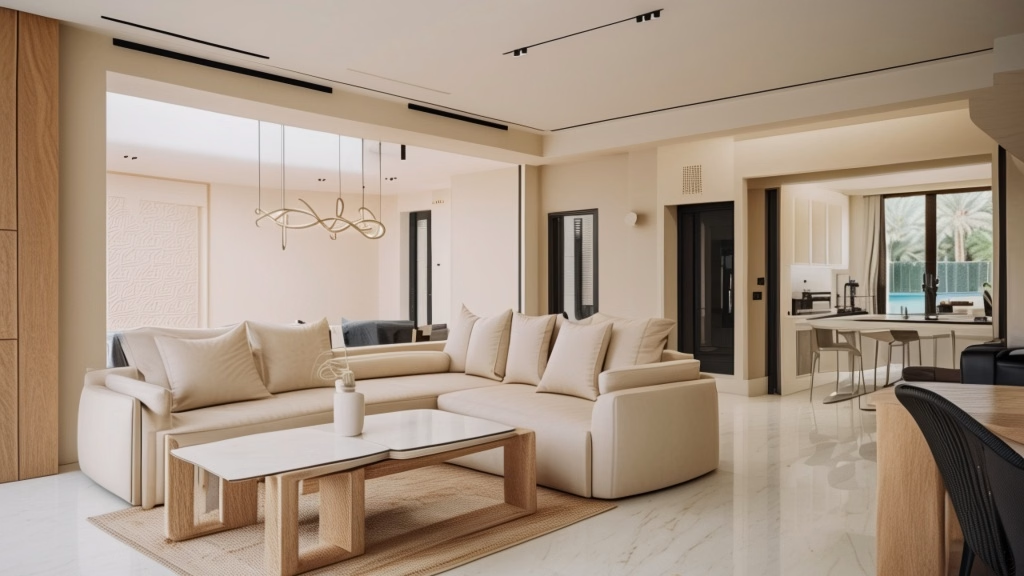
In the contemporary majlis, the diwan is typically designed as a bespoke upholstered banquette on a low leg or on a slim platform, with back cushions in a structured rectangular format rather than the softer pile of the traditional form. The fabric is a contemporary luxury textile: a heavyweight plain linen in a warm ivory or champagne tone, a Kvadrat wool in a warm grey or stone, or a Rubelli or Dedar silk velvet in a deep single colour. The geometric density of the traditional brocade is replaced by the subtle texture of a plain or very finely woven textile. Individual armrest elements are either omitted or replaced by slim upholstered panels at wider intervals.
Contemporary Ceiling Approaches
The contemporary majlis ceiling references the traditional ceiling’s complexity through architectural means rather than decorative plasterwork: deep coffered panels in a regular geometric grid create shadow and depth from the ceiling plane without the ornamental richness of traditional arabesque plaster. A single large pendant of significant sculptural presence (a Bocci cluster pendant, a bespoke blown glass chandelier, or a large-format Ochre or Apparatus Studio fixture) provides the focal point that the traditional domed central medallion provided in the traditional form.
Contemporary Material Choices
A contemporary majlis palette that works with the Arabic cultural context combines: large-format porcelain in a warm stone tone (Florim or Ariostea in a Sahara Beige or Jerusalem Gold tone) for the floor; a bespoke carpet in a geometric all-over pattern in a tone-on-tone colour combination (warm ivory on cream, deep charcoal on warm grey) in the central floor area; walls in a hand-applied microcement or limewash plaster in a warm ivory or pale ochre tone that provides texture without pattern; and a ceiling in a painted coffer grid in the same warm white with recessed LED strips at the coffer joints. The total palette is deliberately restrained: two or three tones, all from the warm neutral range, providing an architectural backdrop against which the textile richness of the diwan and the accessories become the points of visual interest.
Blended Modern-Arabic Style
The blended modern-Arabic direction is the most commonly commissioned majlis design at Kat Black Design Studio and, arguably, the most sophisticated: it combines the cultural authenticity and spatial conventions of the traditional majlis with the material quality and design precision of contemporary luxury interior design, producing a room that is recognisably and correctly Arabic in its spatial DNA whilst being impeccably current in its material expression.
The key design moves of the blended direction are: a correctly proportioned room with a diwan that is continuous and perimeter-based rather than arranged as sofa groupings; a ceiling treatment that provides architectural richness through contemporary geometric means (recessed panels, shadow gap details, concealed LED cove lighting) rather than traditional plasterwork; a floor in a premium natural stone with a geometric border inlay that references the traditional pattern tradition in a contemporary scale; a diwan in a premium contemporary textile (a Dedar or Rubelli silk velvet in a deep jewel tone) that provides the colour richness of the traditional fabric without its visual complexity; and a small number of accessory elements drawn from authentic UAE craft: a hand-embroidered cushion in a traditional pattern, a handmade ceramic dallah, a bespoke bronze incense burner. The result is a majlis that guests from both UAE national and international backgrounds experience as excellent: genuinely right culturally, and unmistakably high quality by any international standard.
Majlis Colour Palettes
The colour palette of a majlis is one of its most powerful communicators. The traditional majlis colour conventions are deeply embedded in the Arabic cultural understanding of hospitality and status, and deviating too far from them without clear intentionality produces a room that feels culturally uncertain even to guests who cannot articulate why.
- Gold and ivory: the most classic and most broadly appropriate majlis palette. Deep gold diwan fabric, ivory or cream wall plaster, warm beige or travertine floor. Communicates warmth, tradition and generosity. Appropriate for both traditional and blended contemporary directions.
- Deep royal blue and gold: the most formal and most status-communicating combination in the UAE majlis tradition. Deep midnight or royal blue diwan fabric against gold metalwork details and a warm stone floor. Particularly appropriate for the reception room of a large formal villa where the majlis receives state-level guests.
- Burgundy and warm white: a warm and rich combination with strong roots in Gulf Arab interior tradition. Burgundy or deep wine diwan fabric with warm white plasterwork walls and a natural stone floor. More intimate and less formal than blue and gold.
- Contemporary sage and warm stone: the blended contemporary direction’s most current colour expression. A deep sage green or olive diwan fabric against a warm ivory microcement wall and a Jerusalem Gold limestone floor. Culturally rooted (the green of the UAE flag and the Islamic tradition) expressed in a contemporary tone value.
- Charcoal and champagne: the most urban and most internationally styled contemporary majlis palette. Deep charcoal wool diwan fabric, champagne linen cushions, warm grey microcement walls, pale beige large-format porcelain floor. Most appropriate for younger-generation clients commissioning a contemporary majlis in a Dubai Hills or Downtown apartment context.
Furniture Guide
Diwan
The diwan is the majlis’s defining furniture element and the piece that receives the most scrutiny from guests. At the quality specification level, a custom diwan for a standard 5 by 7-metre majlis costs AED 15,000 to AED 35,000 fabricated locally from a client-selected fabric. At the premium specification level, with a fabric from Dedar, Rubelli or Lelievre and a fabrication workshop producing to European upholstery tolerances, the cost is AED 35,000 to AED 80,000 for the same room. At the traditional handcrafted level, with hand-embroidered UAE-craft fabric panels produced by specialist traditional textile craftspeople, costs range from AED 60,000 to AED 150,000 or above.
Al Khatim and Arabesque Side Tables
The side tables and occasional tables of the majlis in the traditional and blended contemporary direction are typically low tables in a geometric metalwork or carved timber frame, sometimes with a marble or glass top. Al Khatim woodwork, the UAE’s traditional interlocking geometric timber craft, produces some of the most beautiful and most culturally specific side table bases available: a 600 by 400-millimetre al khatim geometric table base in an ebonised finish with a Nero Marquina marble top is both a design statement and a direct cultural reference. Sources include specialist UAE craft studios in Sharjah and the Al Fahidi district.
Dallah and Coffee Service Display
The dallah, the traditional Arabic coffee pot, and the finjan, the handleless coffee cups, are the functional and symbolic centrepiece of the Arabic hospitality ceremony and should be given a designated and visible position within the majlis. A low presentation tray or a small alcove in the wall joinery at a convenient serving position communicates that the room is genuinely intended for the Arabic hospitality ritual rather than being a generic formal room. Contemporary dallah designs in brushed bronze or matte black stainless steel bridge the traditional and contemporary directions.
Layout Options
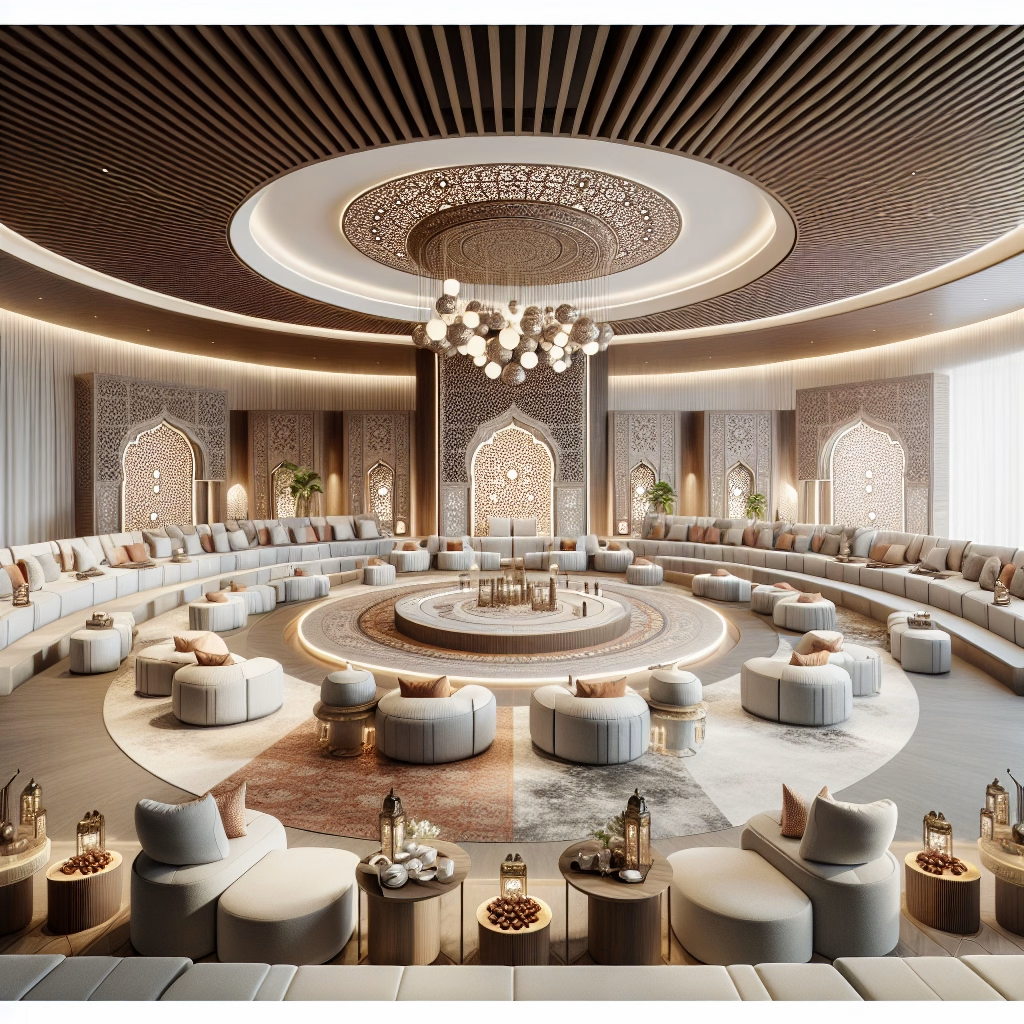
The layout of the majlis is governed by its social function more than by any aesthetic preference. The primary social principle of the Arabic reception room is that every guest must be able to see and be seen by every other guest simultaneously, which is why the perimeter diwan arrangement is the convention: it places all guests in a horseshoe or U-shaped configuration around the central floor area where no guest is concealed from others by the furniture arrangement.
Full Perimeter Diwan
The most traditional layout: the diwan runs continuously around all three non-entrance walls of the room, with the entrance doorway marking the fourth wall. Guests of honour are seated opposite the entrance, the most senior position in the room, with other guests arranged hierarchically along the side walls. The central floor area remains clear for the serving of coffee and for the movement of guests and staff. This layout requires a room of minimum 4.5 by 5.5 metres to function comfortably.
L-Shaped Diwan
The L-shaped layout is the most common compromise between the traditional perimeter diwan and the constraints of a room that is not proportioned for a full perimeter arrangement. Two adjacent walls carry the diwan, with the corner position becoming the most senior seating location. The remaining two walls may carry a single row of occasional chairs or remain clear. This layout is appropriate for rectangular rooms between 4 and 5 metres in the shorter dimension.
Contemporary Semi-Circular
For contemporary and blended-direction majlis rooms in newer villa typologies, a semi-circular sofa arrangement in place of the traditional flat diwan provides the same social sightline convention (all guests facing the central floor area) in a more architecturally dynamic and more contemporary furniture expression. The semi-circle is typically a custom-fabricated curved banquette in a radius of 1.8 to 2.2 metres, specified in the same textile as a traditional diwan but with a contemporary leg and profile.
Majlis Cost Guide
| Scope | Specification | Typical Cost (AED) |
| Diwan (full perimeter, local fabric) | Mid-range | 12,000 to 25,000 |
| Diwan (full perimeter, imported fabric) | Premium | 35,000 to 80,000 |
| Diwan (handcrafted, UAE-craft textile) | Ultra-premium | 60,000 to 150,000 |
| Ceiling (plasterwork, traditional pattern) | Quality | 20,000 to 55,000 |
| Ceiling (contemporary coffer grid with LED) | Premium | 15,000 to 40,000 |
| Floor (natural stone, geometric border) | Quality to premium | 30,000 to 90,000 |
| Joinery (alcoves, side table niches, doors) | Premium | 25,000 to 70,000 |
| Bespoke chandelier or pendant | Quality to ultra | 8,000 to 80,000 |
| Carpet (central area, hand-knotted wool) | Premium | 15,000 to 60,000 |
| Full majlis design and fit-out (standard) | Quality to premium | 120,000 to 350,000 |
| Full majlis design and fit-out (luxury) | Luxury to ultra-luxury | 300,000 to 700,000+ |