

Home > Majlis Interior Design Dubai: Traditional & Contemporary Arabic Spaces
Majlis Interior Design Dubai
Kat Black Design Studio is one of the few interior design studios in Dubai with the cultural depth and design expertise to deliver genuinely excellent majlis interiors with our premium majlis interior design services. Traditional Arabic majlis design, contemporary majlis spaces and blended modern-Arabic schemes are all within the studio’s specialist portfolio, with completed projects for UAE national and GCC clients across Dubai Hills Estate, Palm Jumeirah, Jumeirah and Arabian Ranches. The majlis is not a generic room that any interior designer can approach. It is a culturally specific space with precise spatial conventions, social functions and material traditions that inform every design decision from the seating configuration to the ceiling treatment. This page covers what a majlis is, the design approaches the studio applies, the furniture and material requirements of each style and the completed project evidence that supports the studio’s claimed expertise in this discipline.
What is a Majlis?
The word majlis (Arabic: مجلس) translates as ‘a place of sitting’, but the cultural reality of the majlis room in UAE villa life is far more significant than this simple translation suggests. The majlis is the primary reception room of a Gulf Arab home, the space in which the host receives guests, conducts formal hospitality, holds community discussions and represents the family to the outside world. It is culturally distinct from the living room or family sitting room in that it is reserved primarily for guest reception rather than for family daily life.
In a traditional UAE villa, the majlis occupies a prominent position in the house, typically accessible directly from the main entrance without guests needing to pass through the private family areas of the home. This spatial separation between the public guest reception function and the private family life function is one of the defining architectural conventions of the Gulf Arab residential typology and must be respected in the design of any majlis that serves its cultural purpose correctly.
The social conventions of the majlis inform its spatial design directly. Guests are seated along the walls of the room in an L-shaped or U-shaped configuration, with the host positioned at the head of the seating arrangement facing the entrance. Coffee and dates are served from the right. The room must accommodate formal seating for between 10 and 30 or more guests depending on the size of the property and the family’s social role. In palaces and large villas, a majlis can seat 50 to 100 guests. In a typical Dubai Hills Estate villa, a well-designed majlis of 40 to 60 square metres can accommodate 20 to 30 guests comfortably.
01.
Seating Configuration
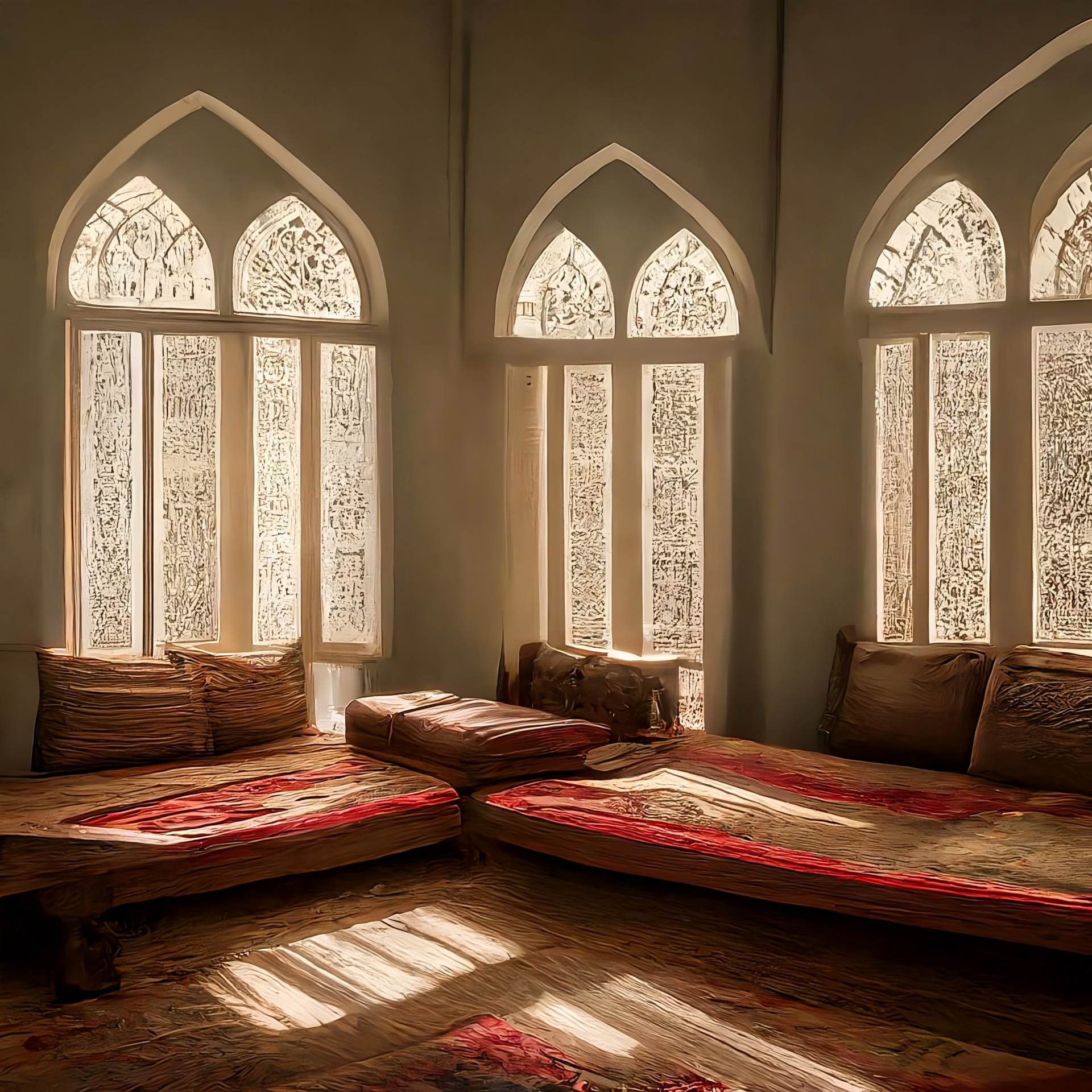
Traditional majlis seating follows the cultural convention: low seating platforms (diwan) running along all walls of the room in an L or U configuration, covered in upholstered cushions in richly coloured fabrics that may include embroidered patterns, woven silk or velvet in deep reds, golds and jewel tones. The platform height is typically 35 to 45 centimetres, allowing guests to sit with their feet on the floor or to adopt a cross-legged seated position according to preference. Bolster cushions along the back and arms define the seating positions along the platform.
02.
Floor Treatment
Traditional majlis floors are typically covered with large, high-quality handmade rugs: Persian, Turkish or contemporary Arabic-design rugs in geometric or botanical patterns that cover the full floor area of the seating zone. The rug defines the social space of the majlis and creates the visual anchor for the room. Beneath the rug, a marble or stone floor is standard in luxury villa majlis rooms, providing a durable, cleanable base that is appropriate to the formal reception function of the space.
03.
Ceiling Treatment
The ceiling is one of the most important architectural surfaces in a traditional Arabic majlis. Coffered plasterwork with geometric pattern, carved timber ceiling panels, gilded arabesque detailing and recessed lighting trays that create a warm, layered illumination are all characteristic of the traditional Arabic ceiling treatment. In luxury villa and palace majlis rooms, the ceiling is often the single most expensive element of the interior, reflecting its cultural prominence as a surface of honour and status.
04.
Walls and Architectural Detail
Wall treatments in traditional majlis rooms typically incorporate arched openings between rooms (iwan), carved plaster or timber screens (mashrabiyya) that filter light and provide ornamental detail, wall niches (mihrab-referenced recesses) for display of cultural objects, and carved stone or stucco column capitals and cornices. Kat Black Design Studio incorporates these traditional architectural elements in new-build and renovated majlis rooms at a level of craft quality that is culturally appropriate and aesthetically authentic rather than decorative pastiche.
-
Seating Configuration
-
Floor Treatment
-
Ceiling Treatment
-
Walls and Architectural Detail
Traditional majlis seating follows the cultural convention: low seating platforms (diwan) running along all walls of the room in an L or U configuration, covered in upholstered cushions in richly coloured fabrics that may include embroidered patterns, woven silk or velvet in deep reds, golds and jewel tones. The platform height is typically 35 to 45 centimetres, allowing guests to sit with their feet on the floor or to adopt a cross-legged seated position according to preference. Bolster cushions along the back and arms define the seating positions along the platform.
Traditional majlis floors are typically covered with large, high-quality handmade rugs: Persian, Turkish or contemporary Arabic-design rugs in geometric or botanical patterns that cover the full floor area of the seating zone. The rug defines the social space of the majlis and creates the visual anchor for the room. Beneath the rug, a marble or stone floor is standard in luxury villa majlis rooms, providing a durable, cleanable base that is appropriate to the formal reception function of the space.
The ceiling is one of the most important architectural surfaces in a traditional Arabic majlis. Coffered plasterwork with geometric pattern, carved timber ceiling panels, gilded arabesque detailing and recessed lighting trays that create a warm, layered illumination are all characteristic of the traditional Arabic ceiling treatment. In luxury villa and palace majlis rooms, the ceiling is often the single most expensive element of the interior, reflecting its cultural prominence as a surface of honour and status.
Wall treatments in traditional majlis rooms typically incorporate arched openings between rooms (iwan), carved plaster or timber screens (mashrabiyya) that filter light and provide ornamental detail, wall niches (mihrab-referenced recesses) for display of cultural objects, and carved stone or stucco column capitals and cornices. Kat Black Design Studio incorporates these traditional architectural elements in new-build and renovated majlis rooms at a level of craft quality that is culturally appropriate and aesthetically authentic rather than decorative pastiche.
Our Expertise
Traditional Arabic Majlis Design
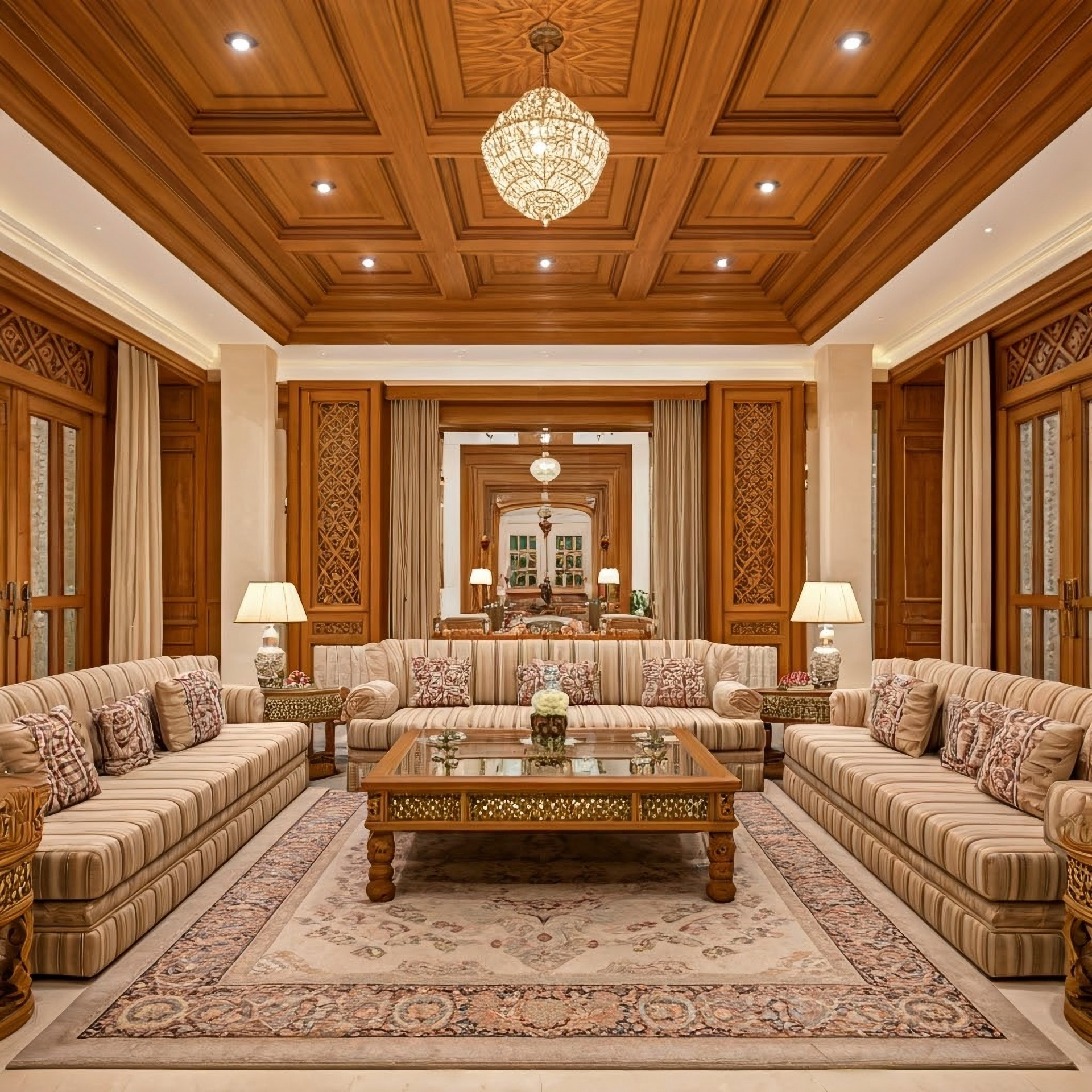
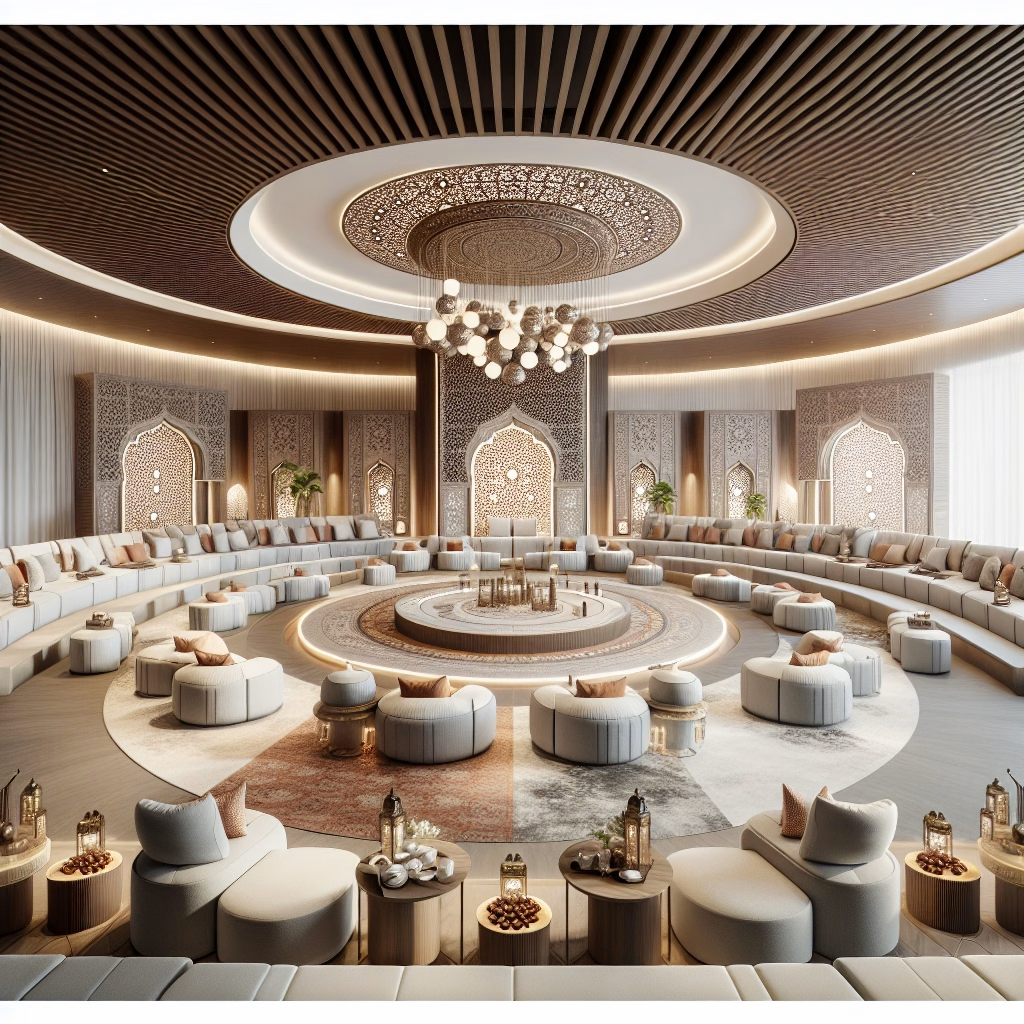
A traditional Arabic majlis design is rooted in the visual vocabulary of Gulf Arab decorative arts: geometric pattern derived from Islamic geometric tradition, warm material palettes combining natural stone, carved timber, hand-woven textiles and metalwork, and an atmosphere of richness and warmth created through the layering of material texture, pattern and colour rather than the sparse elegance of contemporary minimal design.
Diwan Seating
The diwan is the low platform seating unit that runs along the walls of the majlis. In a traditional majlis it is typically a built-in platform of 40 to 50 centimetres in height and 80 to 100 centimetres in depth, upholstered in the relevant fabric and with bolster cushions at intervals defining individual seating positions. In a contemporary majlis, the diwan may be a free-standing modular unit of similar proportions. The depth of the seat is culturally specific: a standard sofa seat depth of 60 to 70 centimetres is too shallow for the cross-legged and semi-reclined sitting positions that majlis seating is used for.
Majlis Tables
Low coffee tables and side tables in the majlis are proportioned for the low seating: a table height of 35 to 45 centimetres for the central table, and individual small side tables for each seating position for coffee cups and dates. Traditional tables in carved timber, mosaic tile (arabesque motif) and metal are appropriate for traditional and blended-style majlis rooms. Contemporary majlis tables in natural stone, smoked glass and powder-coated metal are specified for contemporary Arabic schemes.
Lighting Fixtures
Pendant lights and chandeliers in a majlis carry significant visual and cultural weight. Traditional Moroccan-style lanterns in pierced metal, hand-blown glass pendants in jewel tones, and elaborate multi-arm chandelier forms with glass or crystal detailing are all appropriate for traditional majlis rooms. For contemporary schemes, geometric-form pendant lights with LED light sources in a warm colour temperature, or custom metalwork chandelier forms incorporating geometric pattern in their structure, provide the visual drama and warmth that the majlis ceiling requires without the decorative complexity of traditional forms.
L-Shape Layout
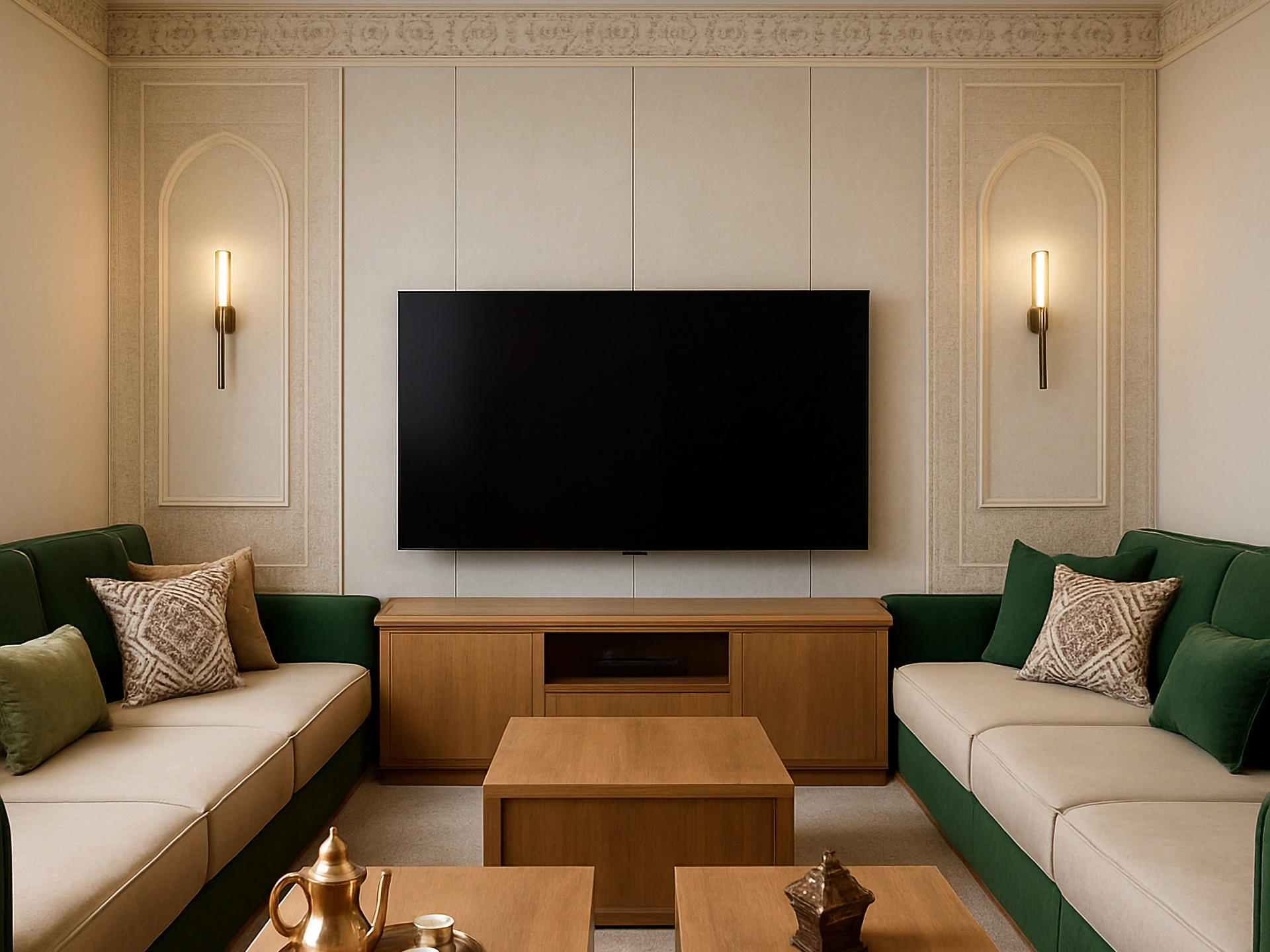
The L-shaped majlis layout places seating along two adjacent walls, leaving the remaining two walls open for the entry and any architectural features such as an alcove, a display wall or a window. This layout is well-suited to majlis rooms that are longer in one dimension than the other and to situations where the entry from the corridor requires a clear sightline into the room from the doorway. It accommodates 12 to 20 guests in a standard villa majlis of 40 to 55 square metres.
U-Shape Layout
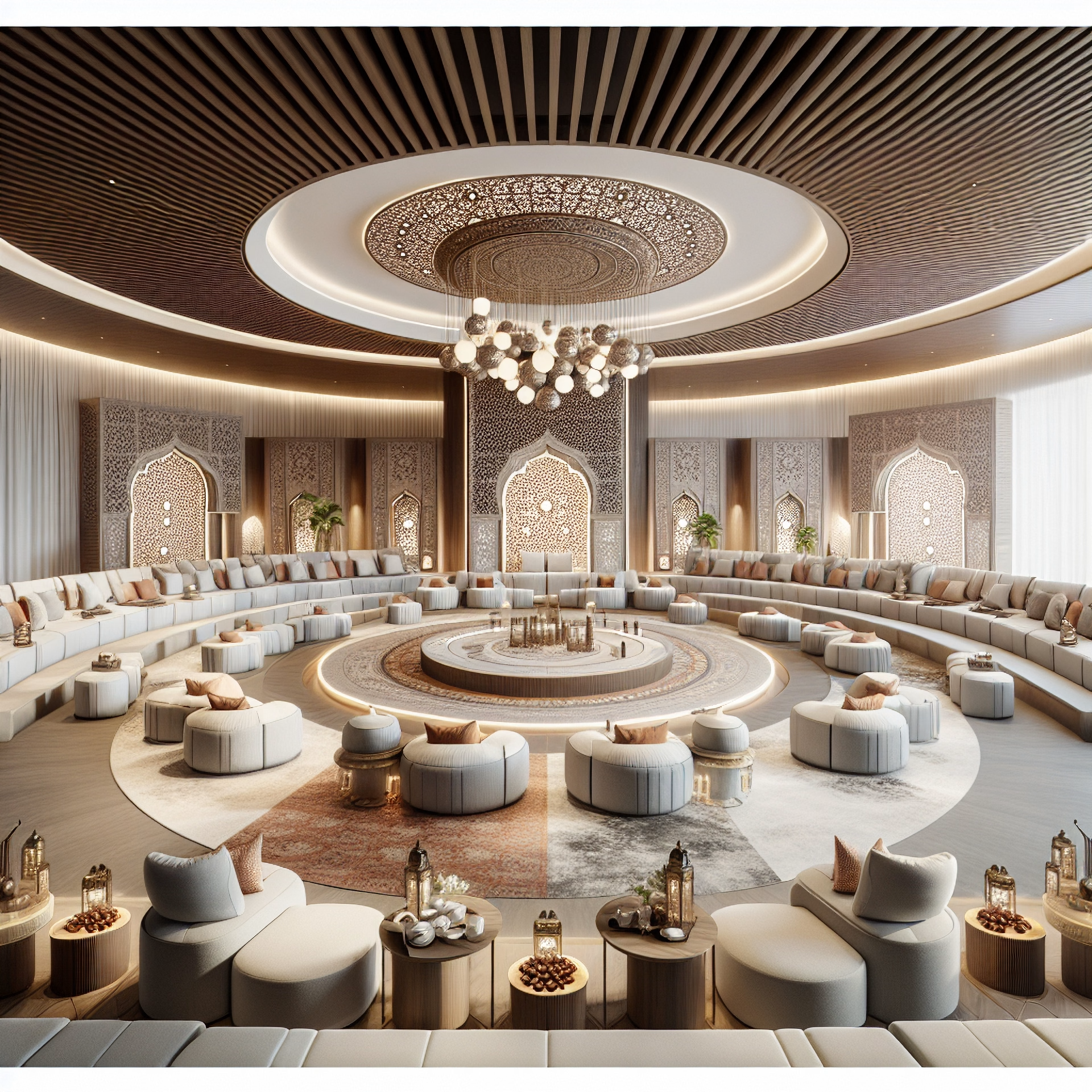
The U-shaped majlis layout places seating along three walls, leaving the entry wall open. This is the most socially encompassing configuration, allowing the host to maintain eye contact with all guests simultaneously and creating the strongest sense of a shared social space. It is most appropriate for square or near-square majlis rooms of 50 square metres or more and can accommodate 20 to 35 guests. The U-shape is the preferred layout for large family gatherings and formal reception events.
Partial-Wall with Central Grouping
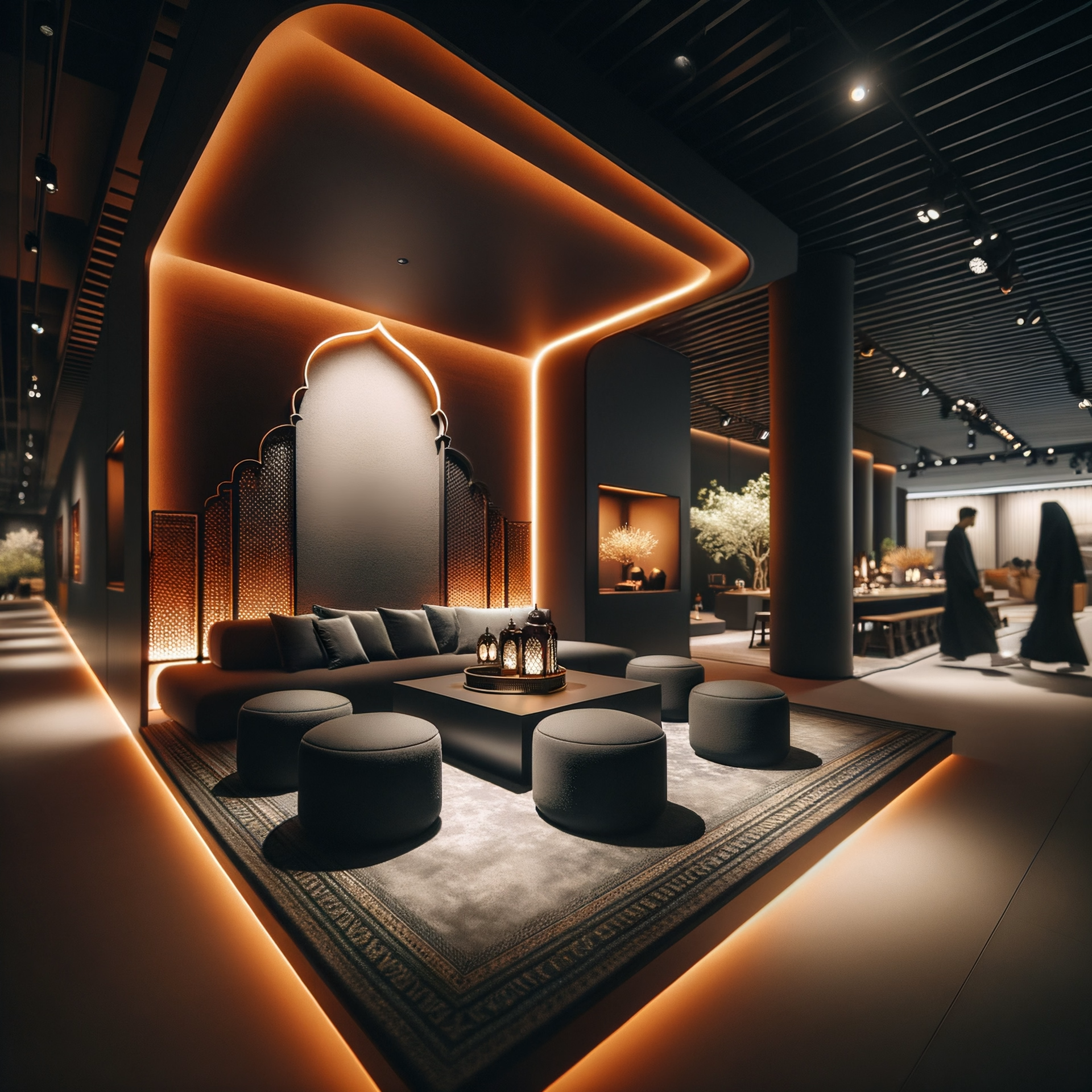
For contemporary majlis rooms where the spatial formality of the traditional full-perimeter seating is not appropriate, Kat Black Design Studio designs partial-wall seating on one or two sides with a central grouping of lower-profile occasional chairs that maintains the L or U formation at a lower visual intensity. This layout reads as a comfortable, sophisticated room first and a majlis second, which is the appropriate balance for clients who want cultural authenticity without an overtly formal atmosphere.
Design
Contemporary Majlis Styles
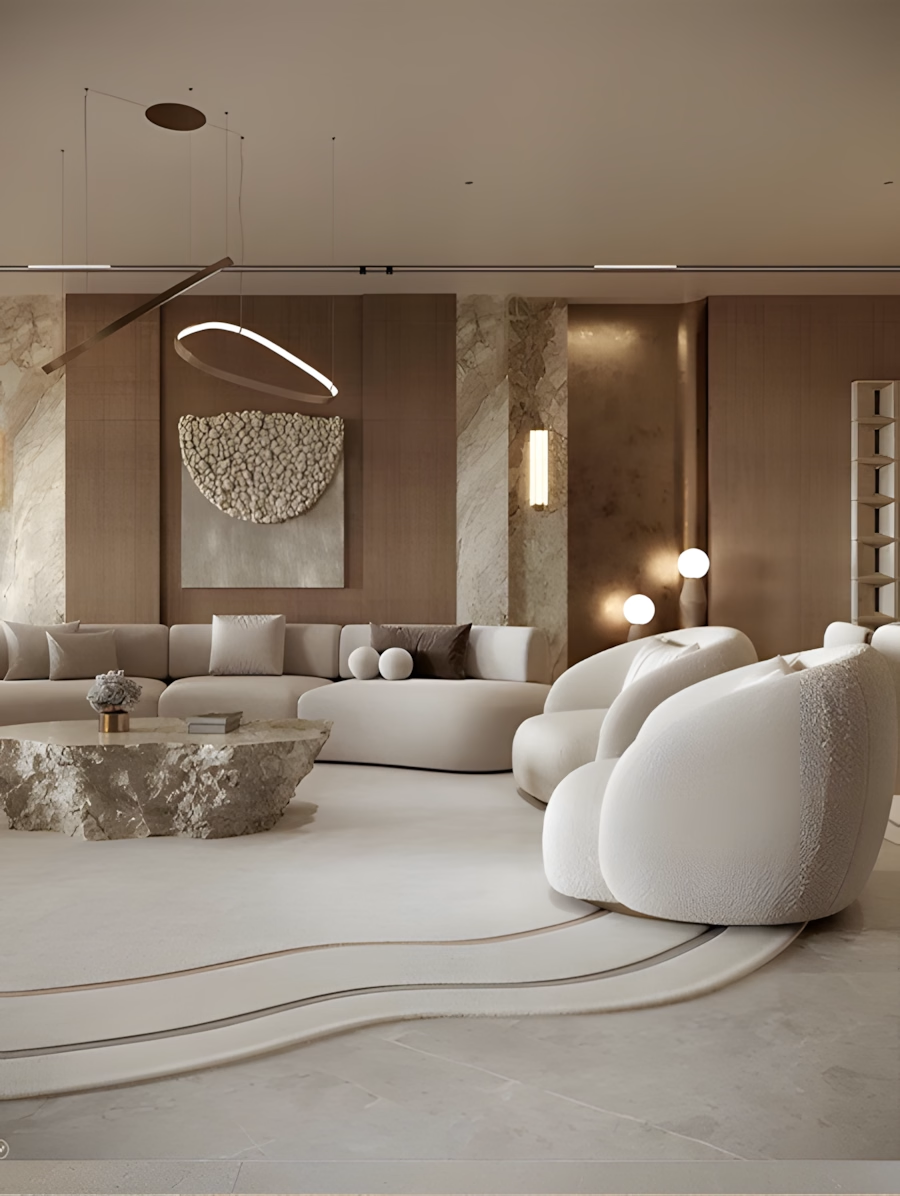
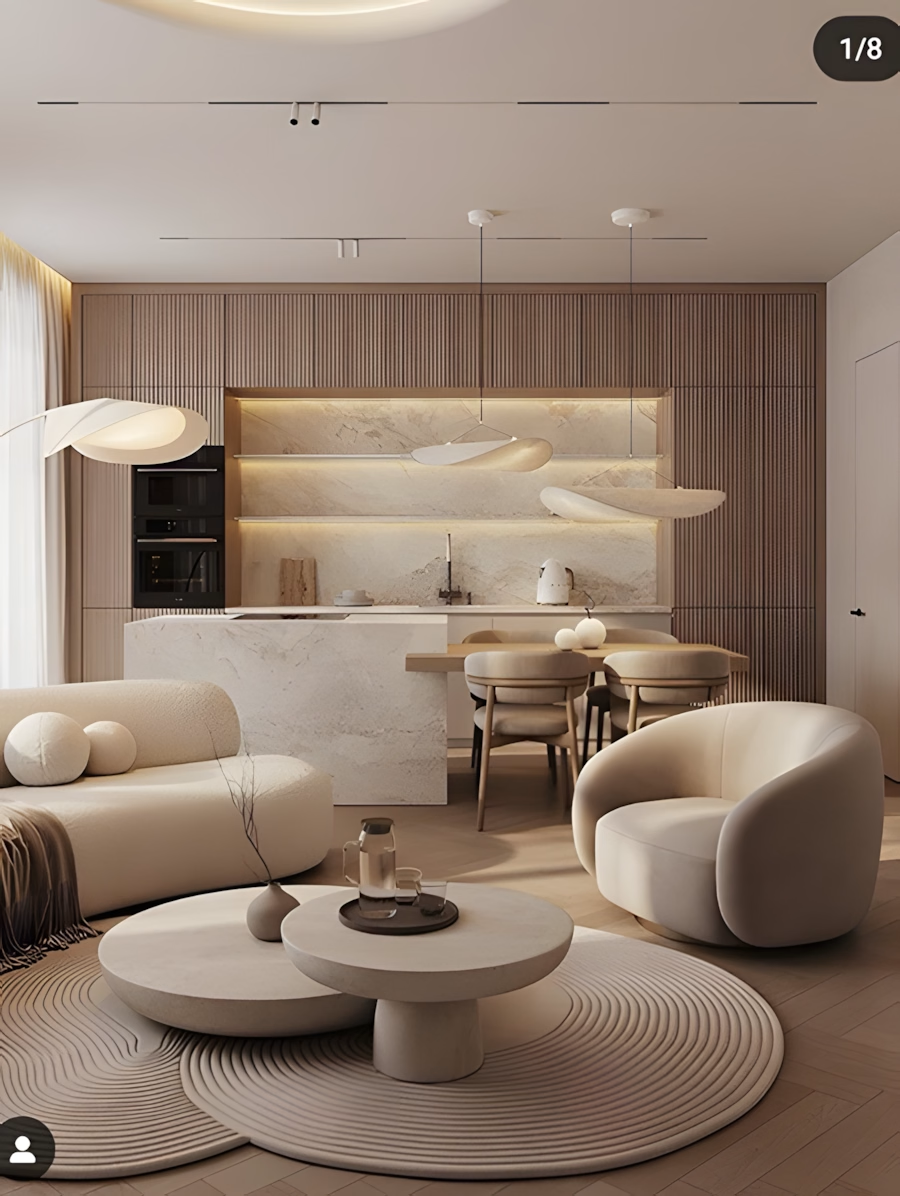
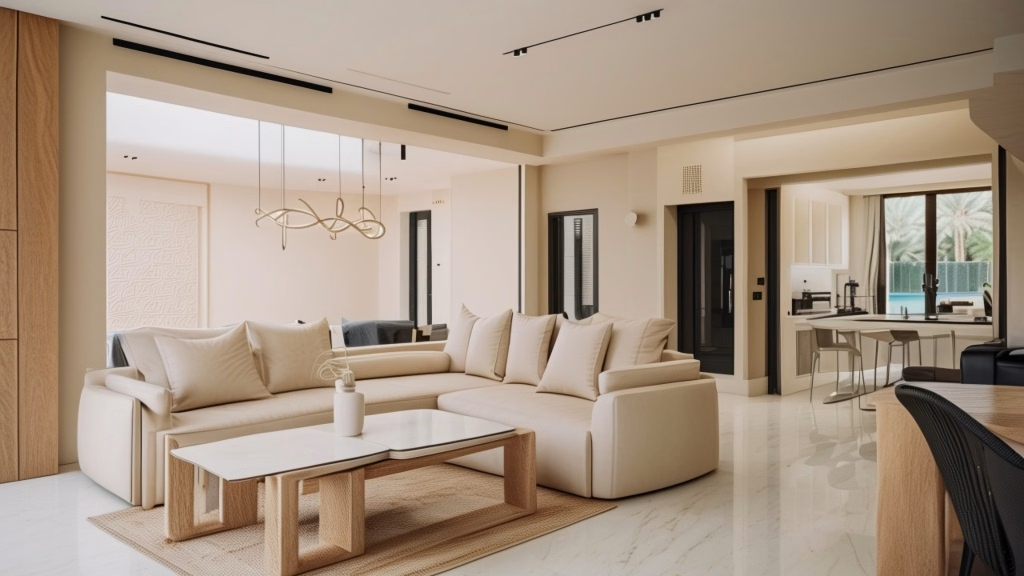
Contemporary majlis interior design applies a modern design language to the traditional spatial and social requirements of the majlis room, producing a space that is unambiguously of its time in its aesthetic whilst fulfilling the cultural functions of its type correctly. This approach is the most commonly requested by younger UAE national clients who want a majlis that feels coherent with the rest of a contemporary luxury villa interior rather than a heritage-style room that contrasts with the overall design direction of the home.
A contemporary majlis at Kat Black Design Studio’s specification level retains the essential spatial conventions of the type: the L or U seating configuration along the walls, the generous room proportion, the formal entry sequence and the separation from the family areas of the villa. What changes is the visual language: the platform seating is upholstered in performance fabrics in warm neutral tones rather than richly coloured traditional textiles, the ceiling is a refined plasterwork or timber cove detail rather than an elaborate arabesque composition, the walls are finished in textured plaster or warm stone cladding rather than painted stucco relief, and the floor is large-format marble or porcelain rather than a traditional handmade rug.
Geometric pattern, drawn from the Islamic geometric tradition but rendered in contemporary materials and at a scale appropriate to modern architecture, is the key cultural reference in a contemporary majlis. Kat Black Design Studio incorporates geometric pattern in flooring inlays, ceiling panel designs, joinery screen work and custom metalwork light fittings that carry the cultural signal of the majlis type within a completely contemporary material context.
Completed majlis interior design projects in the Kat Black Design Studio portfolio include a traditional Arabic majlis in a Jumeirah villa with L-shaped built-in diwan seating in deep burgundy silk, a full coffered plasterwork ceiling with geometric patterning picked out in warm gold, a hand-knotted Persian rug of 7 by 5 metres, Arabescato marble floor beneath the rug and a central chandelier in hand-blown amber glass; a contemporary majlis in a Dubai Hills Estate Mayfair villa with U-shaped low-profile seating in a warm camel performance velvet, a smoke oak timber panel ceiling incorporating a laser-cut geometric pattern, a custom geometric pendant light in brushed brass and large-format stone floor tiles in a herringbone pattern; and a blended modern-Arabic majlis for a UAE national client in Arabian Ranches with a mashrabiyya screen in polished steel as the entry feature, platform seating in a dark slate fabric with geometric embroidered trim, a carved timber and gilded detailing ceiling cornice and a bespoke majlis table in etched Arabescatomarble. Contact the studio for full project photography.
Our Majlis Interior Design Projects
Design
Blended Modern-Arabic Majlis
The blended modern-Arabic majlis interior design is the design direction that bridges the traditional and contemporary approaches, and it is the style that Kat Black Design Studio finds most frequently reflects the actual aspirations of clients who commission a majlis renovation or new fit-out. These clients want a majlis that is visually impressive by any standard, that carries genuine cultural authenticity and that will be immediately recognisable to Gulf Arab guests as a room of quality and cultural intelligence, whilst feeling refined and sophisticated rather than densely ornamented.
The blended approach involves selecting the elements of the traditional majlis that carry the most cultural and visual weight and executing them in a contemporary material language. A carved timber ceiling panel in a geometric pattern, specified in a contemporary smoke oak veneer rather than a gilded traditional finish, reads as culturally informed without feeling historicist. A mashrabiyya screen in polished stainless steel with a laser-cut geometric pattern carries the light-filtering and ornamental function of the traditional timber screen in a material that is completely of the present. Low platform seating in a warm, deeply textured fabric with geometric embroidered trim retains the spatial convention of the majlis type whilst looking entirely current.
Our Insights
-

- Posted by KatBlack
Best Interior Design Companies in Dubai: 2026 Ranked Guide
Residential
Our majlis was the one room in our Dubai Hills villa that felt dated. Kat Black redesigned it with a contemporary Arabic scheme that honours the cultural significance of the space whilst feeling entirely modern. The level of cultural knowledge in their approach was unlike anything we had experienced with a Dubai studio.
UAE national client
Dubai Hills Estate.
Commercial
We appointed Kat Black for our DIFC office, a full Category B fit-out on a demanding 8-week programme. They delivered on time, DEWA-compliant, and the result is a workspace our team is proud of and our clients notice immediately.
Managing Director
Financial Services Firm, DIFC.
Residential
Kat Black Design Studio transformed our Sidra villa from a bare handover shell into a home we are genuinely proud of. Their management of the Emaar NOC and DM permit process was seamless, and the 3D renders matched the finished space exactly. We would not consider any other studio for our next project.
Villa owner
Sidra, Dubai Hills Estate
Are you ready?
Request a Free Consultation
Kat Black Design Studio has completed projects across Dubai Hills Estate, Palm Jumeirah, Emirates Hills, DIFC and beyond. If you are ready to discuss your interior design, renovation, fit-out or landscaping project anywhere in Dubai or the UAE, request a complimentary consultation today, with no obligation.
Or contact us directly via WhatsApp. All enquiries receive a response within two business hours.