

No city in the world produces a more eclectic interior design market than Dubai. A single street in Jumeirah contains villas decorated in traditional Emirati Arabic, minimalist Scandinavian, full-scale Italian luxury and beachside resort aesthetic, occupied by families from 30 different nationalities who each brought their cultural design reference with them. The UAE’s interior design market is genuinely global in its range, and the question of which style is right for your specific home is more interesting and more culturally layered here than anywhere else. This guide covers the eight most popular and most established interior design styles in UAE homes, with specific guidance on how each style translates to the UAE’s unique climate, light, cultural context and community character.
Contemporary Arabic Style
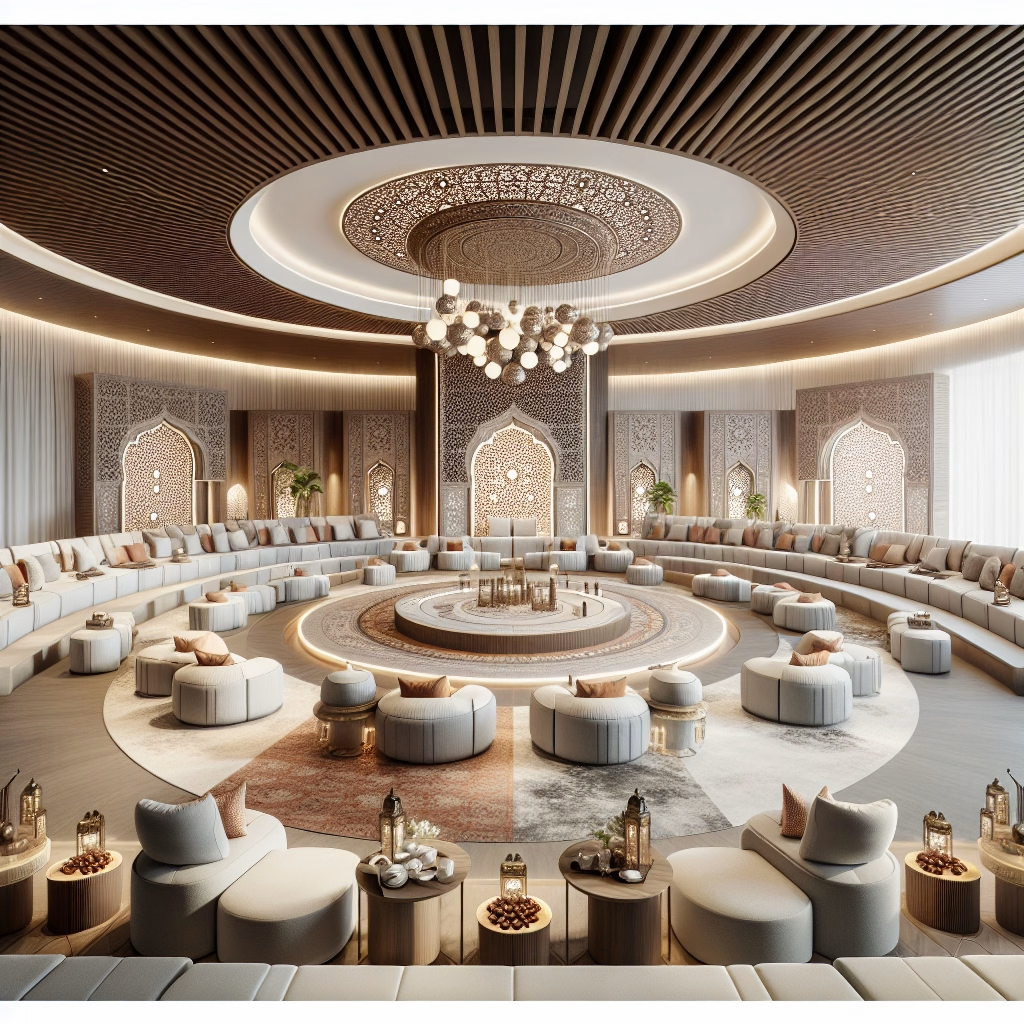
Contemporary Arabic is the most culturally specific and, at its best, the most distinctive interior design style available to homeowners in the UAE. It is also one of the most frequently misapplied: the difference between a Contemporary Arabic interior that feels genuinely right and one that feels like a theme-park imitation of the Arabic decorative tradition is the difference between cultural knowledge and surface pattern application.
Genuine Contemporary Arabic design draws from the spatial conventions and material culture of the Gulf Arab home: the proportionally correct majlis with its perimeter diwan and its invitation to conversation; the geometric pattern tradition of Islamic architecture expressed in contemporary materials and scales; the warm ochre and cream palette of the UAE’s desert landscape; the craftsmanship of al khatim woodwork and hand-embroidered textiles; and the spatial generosity of rooms designed for the Arabic hospitality tradition of receiving many guests simultaneously. The Contemporary Arabic interior that succeeds in 2026 does all of this with the material quality and the design precision of contemporary luxury interior design, without resorting to the ornamental density of the traditional interior or the superficial pattern application of the decorator who has studied Arabic motifs without understanding their cultural context.
UAE considerations: Contemporary Arabic is the most appropriate style for villas with a formal majlis, for UAE national and GCC client households, and for any property in a community where the architectural character of the building has Arabic vernacular references. It is the style with the deepest local cultural resonance and the strongest connection to the place where it is designed and built.
Modern Minimalist
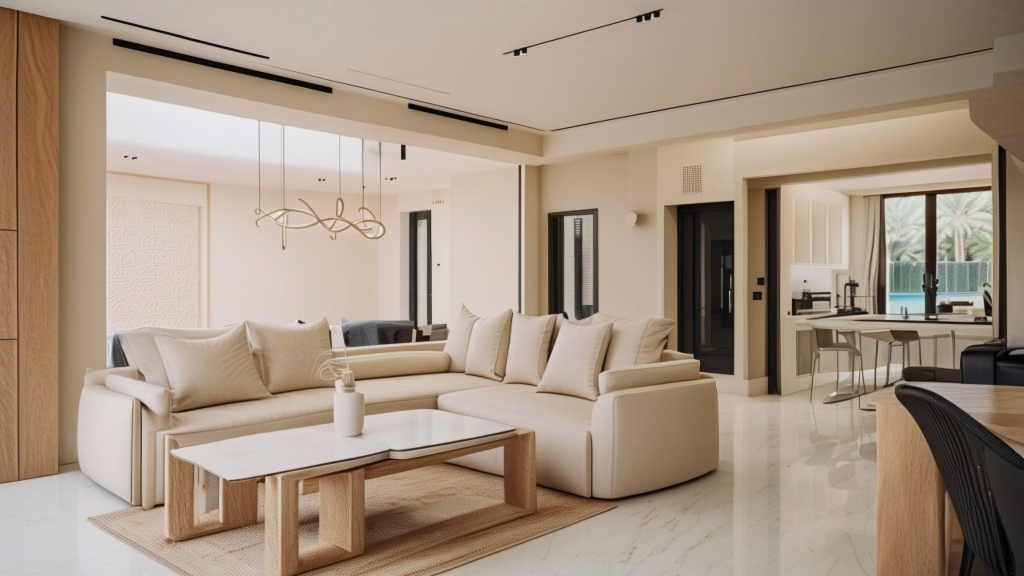
Modern minimalism in the UAE context means something subtly different from the cool, grey-toned minimalism of Northern European interior design. Dubai’s light is warm and intense, and a minimalist interior that reads as crisp and elegant in a London townhouse can feel stark and unwelcoming in a villa flooded with the warm afternoon sun of the Arabian Gulf. UAE minimalism works best when it is warm-toned minimalism: the palette of warm white, pale beige, natural stone and bleached timber rather than the pure white, concrete grey and black steel of the European minimal tradition.
The practical case for minimalism in a Dubai villa or apartment is strong: the intense solar gain of Dubai’s climate makes rooms with a high reflectance value more comfortable and more energy-efficient, because light-toned surfaces reflect rather than absorb heat. A well-designed minimalist interior in a Gulf villa also ages better than a heavily furnished alternative: with air-conditioning operating year-round, the natural ventilation that refreshes an overfurnished English interior does not operate, and a minimalist furniture programme accumulates less dust and requires less maintenance.
UAE considerations: specify warm-toned materials (beige travertine, bleached oak, warm white plaster) rather than the cool greys and stark whites of European minimalism. Allow for storage joinery that is extensive but visually minimal: a minimalist room must have somewhere for the accumulated life of the household to live out of sight, or the visual discipline of the style will erode within months of occupation.
Luxury Maximalist
Luxury maximalism has deep roots in Gulf residential design and remains the dominant aesthetic choice for the most aspirationally positioned properties in the UAE. At its best, it is a celebration of craft, material richness and the cultural tradition of receiving guests with the finest available objects. At its worst, it is an accumulation of expensive objects without design intelligence binding them into a coherent whole.
The luxury maximalist interior that succeeds in 2026 in the UAE has a design logic underlying its material abundance: a colour palette that is coherent across the whole interior rather than room by room, a hierarchy of material richness (the most elaborate and expensive materials concentrated in the most socially significant rooms, the majlis and the formal dining room, with quieter and more restrained treatments in the private family areas), and a furniture programme selected for its individual quality as well as for its coherence with the wider design scheme.
UAE considerations: the luxury maximalist tradition in the Gulf has specific material reference points that are worth knowing if you are designing in this direction: Swarovski crystal chandeliers, Italian marble in the most dramatic bookmatched formats, gold-leafed ceiling details, hand-knotted silk carpets from Isfahan or Tabriz, and bespoke furniture from the Italian manufactures are all established luxury markers in this context. The most current expression of Gulf luxury maximalism in 2026 uses these material references with greater restraint and selectivity than in previous generations, concentrating the richest elements in specific focal positions rather than distributing them uniformly across every surface.
Scandinavian Dubai
Scandinavian interior design has become one of the most popular style directions in Dubai’s internationally diverse residential market, driven by the large communities of Northern European professionals and families who constitute a significant segment of Dubai’s expatriate population and who bring their domestic design culture with them. The principles of Scandinavian design translate well to the Dubai residential context: the emphasis on natural light maximisation is directly relevant in a climate where every square metre of natural light has high value in the October to April season; the material honesty of timber, wool and linen produces an interior that is warm and comfortable without the maintenance complexity of more elaborate specifications; and the functional intelligence of Scandinavian furniture design, with its emphasis on compact proportions and generous storage, is well-suited to the relatively modest floor areas of many Dubai apartment and mid-range villa properties.
UAE considerations: the bleached and whitened timber finishes of classic Scandinavian design become even more appropriate in the UAE context because their high reflectance value maximises the perceived brightness of interiors that rely heavily on artificial light during the summer months when outdoor shutters are often closed against the heat. The Scandinavian palette of warm white, natural linen, pale birch and soft sage green is one of the most successful cross-cultural blends in Dubai’s interior market: it is warm enough to work in the Gulf light, restrained enough to suit the apartments and compact villas where it is most often applied, and internationally understood enough to appeal to a broad range of Dubai’s diverse occupant population.
Industrial Chic
Industrial chic, defined by exposed concrete, raw steel, reclaimed timber and a palette of dark greys and warm neutrals, has a smaller but loyal following in Dubai’s interior design market, concentrated primarily in the younger professional apartment market of Business Bay, Dubai Marina and JLT, and in the F&B and retail spaces of Gate Avenue, Alserkal Avenue and City Walk. As a residential style, industrial chic in Dubai is most successfully applied in loft-format apartments with high ceilings that can accommodate the architectural drama of exposed concrete soffits and industrial pendant lighting, and in studios and one-bedroom apartments where the style’s aesthetic boldness compensates for the limited floor area.
UAE considerations: exposed concrete is not always structurally available in Dubai apartments, where the ceiling void above a suspended ceiling may contain extensive MEP infrastructure that cannot be left exposed. A faux-industrial aesthetic using poured concrete-effect microcement on walls and ceilings, combined with powder-coated steel joinery and reclaimed timber elements, produces the visual language of industrial chic without requiring the structural conditions of a genuine loft. The palette of dark warm greys and charcoal tones that defines the style also requires careful calibration in Dubai’s light: rooms with south and west-facing windows that receive intense afternoon sun can work well with a darker palette, whilst north-facing rooms risk feeling uncomfortably dim.
Biophilic Design
Biophilic design, documented in detail in the Villa Interior Design Trendsguidevilla-interior-design-trends-dubai-2026/, is the most intellectually coherent style choice for homeowners in the UAE precisely because it is a direct design response to the city’s environmental conditions. Dubai’s extreme summer climate creates a psychological need for natural connection that is among the most intense of any major city in the world: six months of outdoor inaccessibility, combined with the urban density of a rapidly developed city with limited mature greenery, makes the presence of natural materials, living plants and organic forms within the interior environment a genuine quality-of-life benefit rather than a design preference.
UAE considerations: biophilic design in Dubai requires specific attention to the selection of living plants for the air-conditioned interior environment. Species that thrive in the low-humidity, controlled-temperature conditions of a Dubai villa or apartment interior include Monstera deliciosa, Ficus lyrata, Sansevieria trifasciata, Pothos aureus and Dracaena fragrans. Outdoor biophilic elements including planted green walls, specimen trees in the garden and naturalistic planting schemes require the use of UAE-adapted or UAE-native species: Ghaf (Prosopis cineraria), Sidr (Ziziphus spina-christi), and the various drought-tolerant ornamental species documented.
Bohemian
The Bohemian or Boho style, characterised by layered textiles, mixed cultural references, handcrafted objects and a relaxed, collected-over-time aesthetic, appeals to a specific segment of Dubai’s diverse expatriate market: creative professionals, long-term UAE residents who have accumulated travel objects from across the region, and households seeking an alternative to the polished luxury aesthetic that dominates the premium end of the Dubai market. The Bohemian interior in the UAE context draws naturally from the craft traditions of the surrounding region: Moroccan zellige tile, Persian kilim rugs, Indian block-print textiles, Egyptian cotton, UAE-craft basket weaving and the hand-hammered metalwork of the Arabian Gulf souks all provide authentic material references for a regionally sourced Bohemian interior that is specifically and meaningfully placed in the UAE rather than imitating a Western European version of the style.
UAE considerations: layered textiles accumulate dust more rapidly in the UAE’s climate than in cooler and wetter environments, and the high air-conditioning use of Dubai residences creates a dry indoor atmosphere that requires regular surface cleaning. A UAE Bohemian interior benefits from specifying textiles with washable covers, choosing hard floor surfaces (stone or tile) with rugs rather than wall-to-wall carpet, and maintaining the living plant elements that ground the style’s organic character with species appropriate for the air-conditioned indoor environment.
How to Choose Your Style
Choosing an interior design style for your UAE home requires answers to four questions that are more specific and more useful than asking which style you ‘like’.
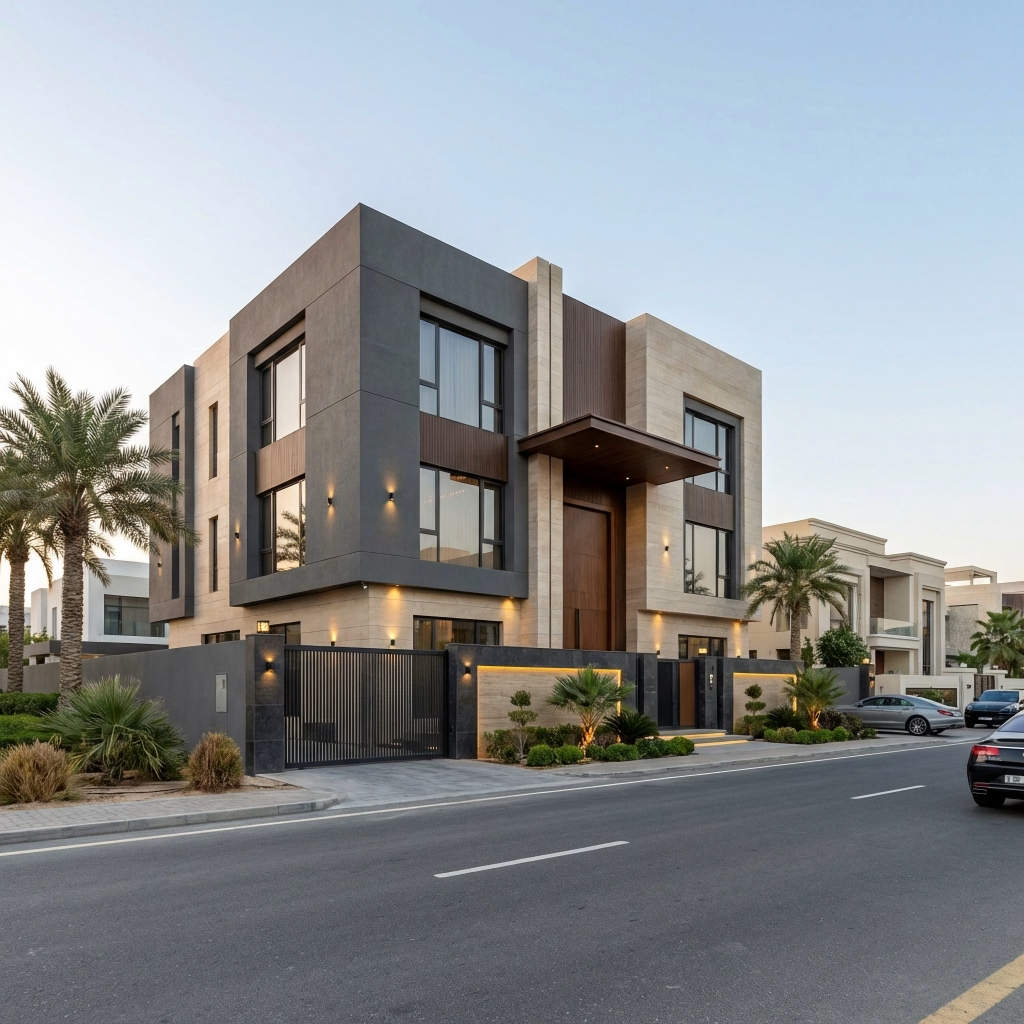
- What is the architectural character of your property? A traditional Arabic-influenced villa with arched openings and a courtyard plan has a fundamentally different design DNA from a glass-and-concrete contemporary tower apartment. The style that is most coherent with the building’s own architectural language will always produce the most satisfying result, because the interior design is in conversation with the architecture rather than imposing a foreign aesthetic over it.
- Who will live in the property, and how? A family with young children in a Dubai Hills Maple villa needs a different style approach from a DIFC-based professional using a Marina apartment as a pied-a-terre. Durability, practicality, family functionality and the specific lifestyle of the occupants should filter the style choice before any aesthetic preference is applied.
- What is the community context? The design language of Emirates Hills golf villas, the resort-lifestyle character of Palm Jumeirah beachfront properties and the urban professional environment of DIFC apartments each suggest different and appropriate style directions. A property whose interior is in harmony with its community character retains its appeal and its value more reliably than one that imposes an incongruous aesthetic.
- What is your relationship with the style over time? An interior that looks extraordinary in a magazine but requires significant ongoing maintenance, that feels cold in the six months you spend in Dubai but impresses guests, or that satisfies an aspirational image but does not reflect how you actually live, will not produce a home that you love inhabiting. The most successful UAE interior design combines aesthetic ambition with genuine lifestyle suitability.